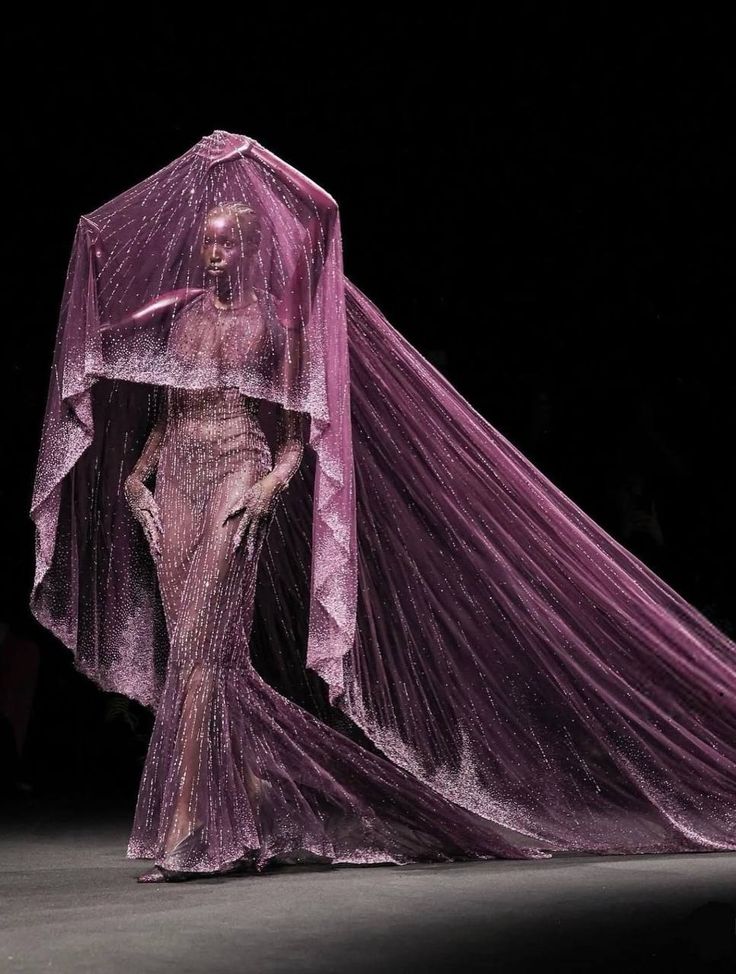
Ask anyone to describe fashion and the word arrives almost immediately. Art. One of the greatest art forms. A form of self-expression. A canvas. The vocabulary is consistent, reflexive, and almost entirely empty. Nobody who says it stops to consider what they mean by it, because the point was never precision. The point was elevation. Fashion has spent decades reaching for the word art not because the claim is examined, but because the association flatters.
The Met Gala's 2026 dress code, Fashion is Art, is the institutional version of the same impulse. Three words, no qualifiers, issued from the most authoritative cultural address in the room. It does not invite a conversation. It closes one. And in closing it, it reveals more about what the word art has become than it does about what fashion is.
This is the part worth sitting with. Fashion is among the most pervasive forces in human culture. It is the first thing people see, the most personal choice most people make daily. It can be theatrical beyond anything a stage can contain, political without a manifesto, personal without explanation. It moves. It ages. It exists on a body that breathes and carries a life inside it. No other form does all of that simultaneously. And yet the highest compliment the conversation has found for it is a word that belongs to something else entirely.
"Calling something art in 2026 communicates almost nothing except the speaker's desire to confer importance."
Art used to mean something specific. A category with edges, with criteria, with a history of debate about what qualified and what didn't. Those edges have been worn down so completely that the word now functions as a general intensifier, a way of saying this is serious, this matters, do not dismiss this. It is the highest compliment available in casual cultural conversation, which is precisely why it has stopped being a compliment and started being a reflex. Calling something art in 2026 communicates almost nothing except the speaker's desire to confer importance.
Karl Lagerfeld, who spent six decades inside fashion and understood its conditions better than most, refused the label. Designers produce continuously, seasonally, for market consumption. They do not have the luxury of time that fine artists do. That constraint, he argued, places fashion in a different category. Not lesser, different. The distinction mattered to him because fashion has its own terms, its own logic, its own criteria for what constitutes excellence. Borrowing art's vocabulary doesn't strengthen those terms. It obscures them.
Chanel made the same argument through practice rather than statement. Her work was defined by utility, by function, by clothing that served the body wearing it. That is not a lesser ambition than art. It is a different one. Fashion at its most precise is about the relationship between a garment and a person in motion. The moment it abandons that in favour of being observed, it has stopped being fashion without quite becoming art.
What the carpet at this year's Met illustrated, predictably, was the literalism the dress code invites. Guests arrived looking like paintings, like sculptures, like museum installations. Dressed to be contemplated rather than worn. The intention was legible. The result was fashion performing art rather than being anything at all. Which is the precise opposite of what makes fashion interesting.
"The looks that made the more honest argument were the ones that didn't announce themselves."
The looks that made the more honest argument were the ones that didn't announce themselves. One cape combined vintage zardozi, three-dimensional embroidery, and hand-painted gold work drawn from the classical paintings of Raja Ravi Varma. The craft was applied by hand. The reference was specific and earned. The body remained the point. That is not fashion becoming art. That is fashion operating at the level of seriousness the word art was always meant to indicate, before the word lost its edges.
One gown on that carpet refused to sit on either side of the argument. Chicago-based interdisciplinary artist Anna Deller-Yee was commissioned to hand-paint a custom Mugler dress using exclusively traditional fine art materials, no conventional fashion paints, across approximately 40 hours of painting and four days of drying. The colour moves from acid yellow through green into deep inky blues at the hem. The silhouette references archival Mugler from 1997, body-hugging through the torso before releasing into a billowing train. The result is a garment that required a fine artist to exist, that was built using the tools of painting rather than the tools of fashion, and that still had to be worn, still had to move, still had to function as a dress on a body walking a carpet. It does not resolve the question of whether fashion is art. It sits directly in the tension between the two and refuses to come down on either side. That is a more intelligent answer to the theme than the dress code itself managed.
The problem was never that fashion is too theatrical, too extreme, too boundless. Fashion has no ceiling and has never needed one. The problem is that the conversation around it does. Art is the word people reach for when they want to say something exceeds ordinary description. Fashion exceeds ordinary description constantly, by its own logic, on its own terms. Calling it art doesn't elevate it. It just replaces a precise and irreducible thing with a word that has been stretched so far it no longer holds a meaning.
The more interesting question is not whether fashion is art. It is why fashion, with everything it already is, still needs to ask.